Introducing **NEW**
BLACK ELDERS & ANCESTORS
Minnesota Narratives
This activity is made possible by the voters of Minnesota through a grant from the Minnesota State Arts Board, thanks to a legislative appropriation from the arts and cultural heritage fund.
“I won’t say racism, it’s not racism, it’s White Supremacy. Racism comes from a doctrine, which is effectively a religion, that controls white America. And it affects every institution. Every(one) in this country.”
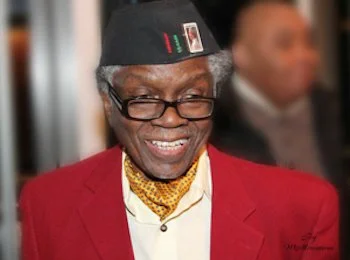
Mahmoud
El Kati
I’m Mahmoud El-Kati. My grandmother, she was a Christian, a practicing Christian. They may not go to church but it’s just, it’s everyday. She was really like what Martin King was committed to, not just on Sunday. The music, my grandmother was not a singer in church, she just sang everyday. When I smelled that bacon, she might be doing something, she was always doing something, scrub board, washboard… “I’ve heard of a city called Heaven, and I want to make it my home. I’ve heard of a city called Heaven…” Oh God, and then, “Go down Moses, way down in Egypt land. Tell old Pharaoh, let my people go.” That was sung in church but I didn’t learn that in church. That was my grandmother and that was every day, humming and singing, and she wasn’t looking for a contract with Motown, you know. That’s a part of her life, and religion was an everyday thing, and I was influenced by that. Her influence has been profound on me. Second to the religious thing… second, and most important thing she gave me, she learned how to read during the Reconstruction era. That was a precious thing to possess. That generation, if they could read, that was power. So much so that she taught me. I didn’t go to Kindergarten like my older brother and sister. They went to Miss Tilly. You know, there’s a great legendary teacher in every Black community back during the day, and Miss Tilly, everybody went through Miss Tilly. I didn’t go because I could half-way read when I went to first grade. That’s my grandmother. Hollywood can’t capture that. Broadway can’t deal with that. White Supremacy is wicked. There was a time I couldn’t say this, people would get mad at me when I called, I won’t say racism, it’s not racism, it’s White Supremacy. Racism comes from a doctrine, which is effectively a religion, that controls white America. And it affects every institution. Every in this country. I think the greatest American affliction, it’s an affliction, is the doctrine of White Supremacy. It’s like an illness that they can’t get rid of. There are good white people trying to figure out right now, “How the ham sandwich can I get out of this mess?” You can’t, unless you follow the words of James Baldwin, “The World is not white, it is not Black either. The future of this world belongs to everyone, and that future depends on to what extent and by what means we liberate ourselves from a vocabulary which cannot now bear the weight of reality.” The vocabulary is White Supremacy.
I’m Mahmoud El-Kati. My grandmother, she was a Christian, a practicing Christian. They may not go to church but it’s just, it’s everyday. She was really like what Martin King was committed to, not just on Sunday. The music, my grandmother was not a singer in church, she just sang everyday. When I smelled that bacon, she might be doing something, she was always doing something, scrub board, washboard… “I’ve heard of a city called Heaven, and I want to make it my home. I’ve heard of a city called Heaven…” Oh God, and then, “Go down Moses, way down in Egypt land. Tell old Pharaoh, let my people go.” That was sung in church but I didn’t learn that in church. That was my grandmother and that was every day, humming and singing, and she wasn’t looking for a contract with Motown, you know. That’s a part of her life, and religion was an everyday thing, and I was influenced by that. Her influence has been profound on me. Second to the religious thing… second, and most important thing she gave me, she learned how to read during the Reconstruction era. That was a precious thing to possess. That generation, if they could read, that was power. So much so that she taught me. I didn’t go to Kindergarten like my older brother and sister. They went to Miss Tilly. You know, there’s a great legendary teacher in every Black community back during the day, and Miss Tilly, everybody went through Miss Tilly. I didn’t go because I could half-way read when I went to first grade. That’s my grandmother. Hollywood can’t capture that. Broadway can’t deal with that. White Supremacy is wicked. There was a time I couldn’t say this, people would get mad at me when I called, I won’t say racism, it’s not racism, it’s White Supremacy. Racism comes from a doctrine, which is effectively a religion, that controls white America. And it affects every institution. Every in this country. I think the greatest American affliction, it’s an affliction, is the doctrine of White Supremacy. It’s like an illness that they can’t get rid of. There are good white people trying to figure out right now, “How the ham sandwich can I get out of this mess?” You can’t, unless you follow the words of James Baldwin, “The World is not white, it is not Black either. The future of this world belongs to everyone, and that future depends on to what extent and by what means we liberate ourselves from a vocabulary which cannot now bear the weight of reality.” The vocabulary is White Supremacy.
“…my family and my community gave me the tools to be able to survive and thrive, but they also gave me this love. And the thing that I want to just pass on to the folks after me is, that love. Part of the Black Arts Movement, part of our mission as artists, was to leave your community better than you found it.”
Seitu
Jones
My name is Seitu Ken Jones. I was born in North Minneapolis and my earliest memories are of a set of Quonset huts that were on the corner of Lyndale and Olson Highway. We moved up and out of the Quonset huts into the Sumner Field Homes, the second oldest federally funded housing project in the country. We moved from “the projects” as we called them, sometimes affectionately, to move from there to South Minneapolis. My father was born in old Rondo, and we were over here, every weekend, almost, with grandparents, aunties, uncles and on and on and on. And so, you know, I am saying all this to say that I had my feet planted in these three distinct African American communities. And so, I am not a son of Rondo like some of these other folks you are going to interview. I'm more of a nephew of Rondo, than anything else. I was a part of what folks called the Black Arts Movement. There were these centers of activity that drew us together so that we could talk shop, talk shit, be inspired, learn from these folks from before, and one of the places literally up the street from here, Inner City Youth League. You know, I’ve learned more about the role of an artist in the Black community from listening to Kush Bey, a painter, and Alvin Carter, another painter, arguing back and forth about the role of an artist. But, you know I said that my family and my community gave me the tools to be able to survive and thrive, but they also gave me this love. And the thing that I want to just pass on to the folks after me is, that love. Part of the Black Arts Movement, part of our mission as artists, was to leave your community better than you found it.
My name is Seitu Ken Jones. I was born in North Minneapolis and my earliest memories are of a set of Quonset huts that were on the corner of Lyndale and Olson Highway. We moved up and out of the Quonset huts into the Sumner Field Homes, the second oldest federally funded housing project in the country. We moved from “the projects” as we called them, sometimes affectionately, to move from there to South Minneapolis. My father was born in old Rondo, and we were over here, every weekend, almost, with grandparents, aunties, uncles and on and on and on. And so, you know, I am saying all this to say that I had my feet planted in these three distinct African American communities. And so, I am not a son of Rondo like some of these other folks you are going to interview. I'm more of a nephew of Rondo, than anything else. I was a part of what folks called the Black Arts Movement. There were these centers of activity that drew us together so that we could talk shop, talk shit, be inspired, learn from these folks from before, and one of the places literally up the street from here, Inner City Youth League. You know, I’ve learned more about the role of an artist in the Black community from listening to Kush Bey, a painter, and Alvin Carter, another painter, arguing back and forth about the role of an artist. But, you know I said that my family and my community gave me the tools to be able to survive and thrive, but they also gave me this love. And the thing that I want to just pass on to the folks after me is, that love. Part of the Black Arts Movement, part of our mission as artists, was to leave your community better than you found it.